We will relate 'bite-size' new technology to Marshall McLuhan after thinking about this TedTalk.
More than 1.5 billion people around the world, over
half of them under the age of 24, regularly watch short videos: clips
of 60 seconds or less using Snapchat, TikTok, Instagram Stories and
other smartphone apps.
The market barely existed seven years ago, yet today
creators are uploading 702 million short videos every day. As our
attention span is falling to seconds, short video is not only here to stay
but will become the new normal. Unlike other social platforms such as
Instagram, where perfectly edited, polished images are the norm, short
videos are more accessible, inviting imperfection and
authenticity. And because each clip is so short, content producers
have to be creative and concise communicators.
But these bite-sized videos are more than just fun and
entertainment. For me personally, as a consultant and
mother, short videos are where I get parenting tips. On my way to
work I can quickly learn about the secrets of breastfeeding while
traveling and get great ideas about how to make my daughter sleep
sooner. Businesses are also learning that short videos are a great
way to find new customers and expand the diversity of their
audiences.
Earlier this year, I led a project with TikTok, the
world's leading short-video platform, to assess the economic and social
impact of this bite-sized economy. Our study shows that this young medium
is changing a lot more than the way we spend our leisure time. In
2019, short video generated an estimated 95 billion US dollars in
goods and services sold and created roughly 1.2 million jobs
globally. Even within this short lifespan, short video is already
impacting the way we work, communicate and learn.
In the age of COVID-19, while museums around the world
are facing indefinite closure, many have acted quickly to bring in an
engage and new, younger audience remotely. The Uffizi Gallery in
Florence, which just established its official new website three years
ago, is using short video to attract new audiences to their statues
and paintings. By matching exhibits with emojis, music lyrics or funny
quotes, the museum is making its artwork more accessible and relevant
to the young generation of art lovers. In one of its recent posts, a
cartoon coronavirus turned into a rock and smashed in half in front
of Caravaggio's painting "Medusa," who has the power to turn
those who gaze at her into stone.
(Video) (Music: "Symphony No. 5")
(Recording) Cardi B: Coronavirus!
(Voice-over) Qiuqing Tai: Uffizi also experimented with
influencers livestreaming from the gallery on short-video
platform, allowing viewers around the world to experience art that
they've never been able to see in person. Since its appearance on TikTok
in April 2020, the museum's profile has attracted more than 43,000
followers in three months. This speed is far quicker than their
journey on Twitter, where it built up a similar number of fanbase during
the past four years.
Small businesses are also using short video as a way to find
new audiences who might have never heard of them or their products
before. In 2018, Douyin, the leading Chinese short-video platform, as
part of a social responsibility initiative to alleviate poverty in
China, launched a campaign to help individual farmers and small
businesses in China's mountainous areas sell farm produce. As one of its
pilot projects, Douyin invited content producers to create four
pieces of 15-second short videos showcasing the quality of their
products. This is on top of other, regular PR initiatives, such as
promotional articles. Douyin wanted to leverage the large user base of short
video to find those customers who might be interested in those
products and then connected them with the e-commerce website so that
people can buy things as they watch the videos. In just five
days, the initiative helped nearly 4,000 families in Sichuan Province sell
an astonishing 120,000 kilograms of plums.
Many brands that are interested in hiring and recruiting
young people have been using short video as a fresh way to
engage with Generation Z. For example, more than half of
McDonald's employees are aged between 16 to 24. In Australia, the brand
was struggling to recruit in recent years, so it launched something called
"snaplication," which is a Snapchat lens that enabled
users to shoot 10-second videos explaining why they'd be a perfect
McDonald's employee and then prompted them to a link with a job
application. Within 24 hours after launching the campaign, McDonald's
received 3,000 "snaplications," four times more than the number
they received in a whole week using traditional methods. While it's
unclear whether hiring over short video is the best way to find the right
people for the job or to retain talent, but judging solely from recruiting
numbers, the campaign was a global hit. In Saudi
Arabia, McDonald's received 43,000 snaplications within 24 hours, and
the company launched the campaign again later in the US.
Much like how I like to get parenting tips from short
video, many users also want to leverage the platform to learn, but in
tiny, bit-sized doses. In our study, short video users globally ranked the
top benefits of the platform as discovering new interests and learning new
skills. In emerging markets especially, short video for learning and
education has huge potential to change the status quo. In 2019,
TikTok launched a campaign in India with the aim of democratizing learning
for the Indian digital community. While the app has been banned in the
country since July 2020, it launched a huge demand for educational
short-video content and other platforms are jumping in to fill in the
space. TikTok was able to spark this trend by collaborating with
Indian social enterprises, education startups and popular
creators to produce 15-second short videos that covered a range of
topics from school-level science to learning new languages. As the
first wave of short video became widely spread on the platform, audiences
got inspired and some even began to create their own educational
content. By October 2019, the campaign had generated more than 10
million videos and garnered 48 billion views. Through helping people
learn and participate in the process of content creation, short
videos are in fact helping prep and train the skilled population that can
take on the challenges of the future.
Like all social media, there are valid concerns around
short-video platforms, including data privacy, the addictive nature
of the format and the lack of nuance and context in the
content. However, I still think that the positive outcomes of short
video will outweigh its downsides. I believe short video will become
a more vital economic and social force in the future. It is precisely
because of this that we need to find the right way to benefit from this
young medium through collaboration among users, platforms and
policymakers. Thank you.
How do you and your peers use these technologies?
Is it reflected by the figures below, taken from the Media Education Conference on 13.02.21?
Compare audience consumption of 'traditional' media and 'new' technology:
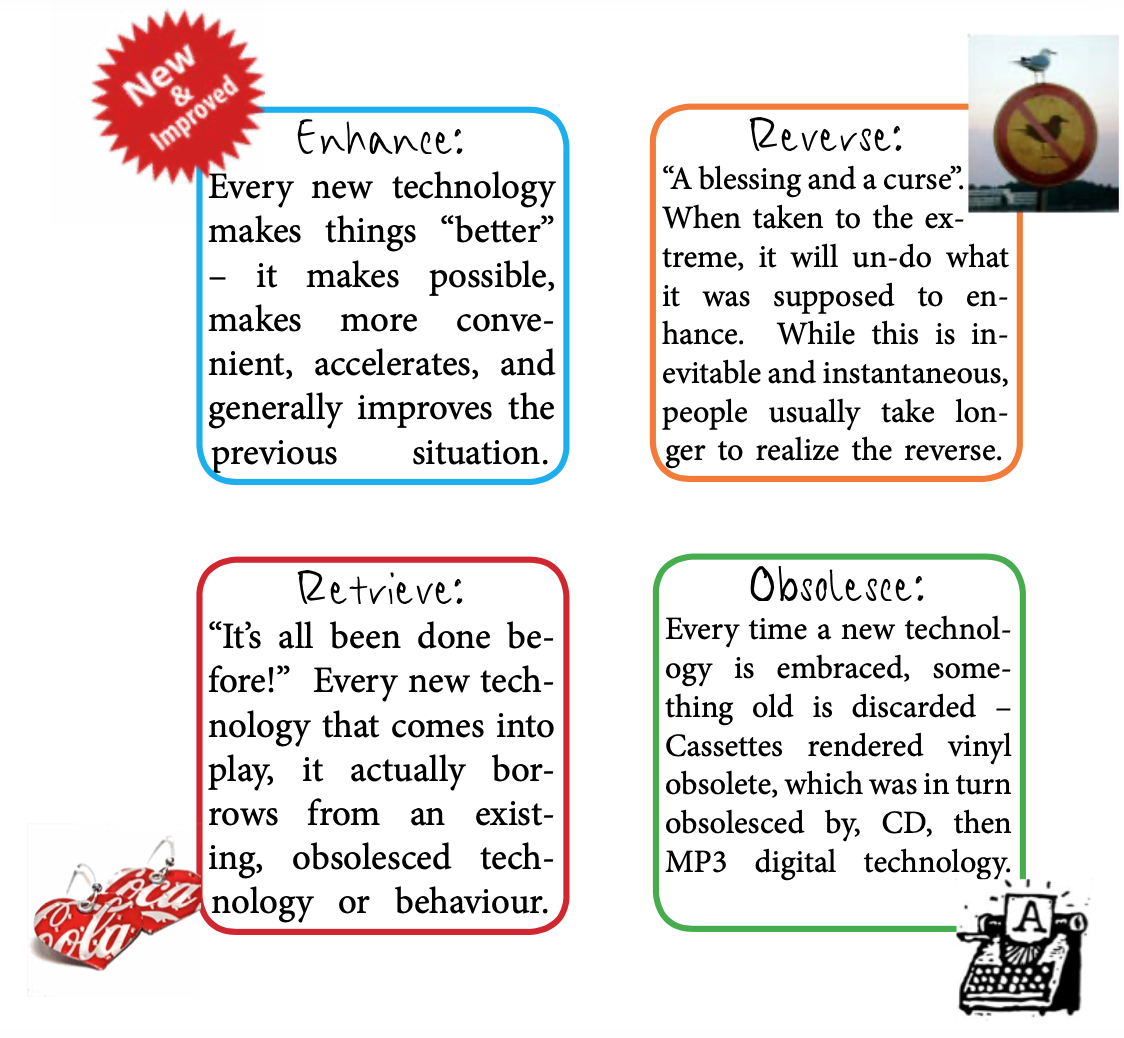
How can we relate 'bite-size' technology to Marshall McLuhan's Four Tetrads?
We can practise applying this by looking at this article about how the smartphone has replaced other technology.