We subscribe to the Media Magazine, from where this article on Hegemony was taken. Acknowledgements to Claire Pollard, the author.


We subscribe to the Media Magazine, from where this article on Hegemony was taken. Acknowledgements to Claire Pollard, the author.
"The media construct identity." How far do you agree with this view?
In your second year exam, you have a compulsory question on this topic Power and the Media. In our classes, we will be exploring how film, TV, the press and advertising construct representations of different groups. For example, we look at representations of gender and of Asian and Black identity. The full A2 course is here. Think about your recent analysis of gender (and disability) in Agent Carter.
Today, we start with the concept of Orientalism and the 'othering' of different cultures.
The media have huge power to construct representations and to perpetuate stereotypes. Stuart Hall, Professor of Sociology at the Open University in the field of cultural studies, emphasises the importance of the concept of representation, a term which I understand to relate to the accuracy or distortion of the reflection of a person, group or idea. Although he argues for audiences having an active role in understanding media representations, for Hall, communication is always linked with power and those groups who wield power in a society influence what gets represented through the media.
We also start viewing a major text the film Yasmin - all parts available online. It stars the brilliant Archie Panjabi.
Yasmin is a compelling and topical personal drama of what it means to
be Asian, Muslim and British in the 21st century, told from the
viewpoint of a Westernised woman working in Britain while living in her
own traditional culture.

Orientalism is an attitude that entails the stereotyping of Arab peoples and culture as exotic, backwards, uncivilized and sometimes dangerous. Orientalism emphasises, distorts and exaggerates differences between the West (Europe and the US) and the East. Edward Said was a founder of the field of post-colonial studies and his work Orientalism was a foundational text.
We watch the presentation below here

For Edward Said, the West constructs the East as an inferior ‘other’ in need of Western intervention and rescue; this was to rationalise the colonisation of the Arab world. From the 19th century onwards, popular paintings, literature, postcards, cartoons - that is, contemporary media - all portrayed certain stereotypes of Arab culture as an exotic and dangerous place of sand, belly dancers and hareems, with women exoticized and eroticized. It relates to the media because of its power to shape perceptions about identity. Said declared: “The sense of Islam as a threatening Other - with Muslims depicted as fanatical, violent, lustful, irrational - develops during the colonial period in what I called Orientalism. The study of the Other has a lot to do with the control and dominance of Europe and the West generally in the Islamic world. And it has persisted because it's based very, very deeply in religious roots, where Islam is seen as a kind of competitor of Christianity.” He argued that the West controlled the representations of the East through their invasions and settlements, their teachings and authorised views. He saw Orientalism as a Western style for dominating, restructuring and having authority over the Orient; he saw the ‘justification’ as every empire telling itself that its mission is not to plunder and control but to educate and liberate.
Our exam question will ask about how representations are created.


In GoogleMeet today, we start by understanding the term 'media ecology' and explore some of the main ideas presented by Marshall McLuhan and Don Tapscott. You have been emailed two documents, which you save in a new desktop file entitled MEDIA ECOLOGY.
As we look at these ideas and theorists, it is useful to bring to mind what is happening in the media world at the moment.
For example, President Trump has this week been banned from Twitter, FB and Instagram: why, and is it a good or bad thing? Why has Jack Dorsey the CEO of Twitter himself expressed concerns? What is the relationship between freedom of expression and social media?
Consider the ways in which the technology of communication has changed in your lifetime / your parents' time / your grandparents' time. Apart from the benefits of your smart phone, what are the downsides? Consider issues like addiction, distraction, sleep interruption, 'never off' scrolling, social disruption, 'never-ending' workday, threats to personal privacy as photos are in the public domain, spam, loss of vital data, health problems, surveillance, theft / crime, conflict minerals, peer pressure, living vicariously... in no particular order.
Why is the Online Harms Bill 2021 considered necessary?

No single individual is more central to media ecology than McLuhan, not because he was the first to employ this perspective, but rather because he popularized the perspective, and produced the first great synthesis of media ecological thought.
McLuhan was viewed as a Technological Determinist in that he viewed technology shaping us, rather than viewing people dictating how the technology will be used.
Clark, D.R. (2004). History of Knowledge. Retrieved from http://www.nwlink.com/~donclark/history_knowledge/mcluhan.html
Marshall McLuhan (1911-1980) foresaw the approaching changes in that it would bring about a new society characterized by greater connectivity and networking:
Whereas in the mechanical age of fragmentation leisure had been the absence of work, or mere idleness, the reverse is true in the electrical age. As the age of information demands the simultaneous use of our faculties, we discover that we are most at leisure when we are most intensely involved, very much as with the artists in all ages - Marshall McLuhan in Understanding Media: The extensions of man (1964).
McLuhan was viewed as a Technologically Determinist in that he viewed technology shaping us, rather than viewing people dictating how the technology will be used.
He is probably most famous for declaring that the medium is the real message (Understanding Media: The Extensions of Man, 1964). Later, McLuhan and Quentin Fiore wrote and illustrated the ability of media to “massage” a message or content (The Medium is the Massage: An Inventory of Effects, 1967):
The message of any medium or technology is the change of scale or pace or pattern that it introduces into human affairs. The railway did not introduce movement or transportation or wheel or road into human society, but it accelerated and enlarged the scale of previous human functions, creating totally new kinds of cities and new kinds of work and leisure. This happened whether the railway functioned in a tropical or northern environment, and is quite independent of the freight or content of the railway medium. Understanding Media, N. Y., 1964, p. 8)
However, later in life, he came to a different conclusion. In Paul Saettler's The Evolution of American Educational Technology (1990, p. 274), Saettler writes, “During the last years of his life, McLuhan changed some of his earlier ideas. He became less certain, for example, in ascribing a causal link between media and personal perception. Where he once saw the human being as a passive responder to media, he came to believe that individuals are active creators of their own environments.”
Saettler further writes that McLuhan's provocative pronouncements stimulated much of the creative thought that we now have about media. Thus, the medium is simply the carrier, while what we do in or through media are the real promoters of learning. Get the learning methodology correct and the media, rather it be large classrooms, small group activities, or asynchronous eLearning will simple be a vehicle for transporting that methodology to the learners.
In his later years, and partially as a response to his critics, McLuhan, along with his son Eric, wrote Laws of Media: The New Science (1988), in which he develops a scientific basis for his thought around what he termed the tetrad— four laws for looking at our culture, framed as questions, to a wide spectrum of humankind's endeavours. He postulates that all media exhibits these four types of effects:
Thus, four questions may be asked of any new media or technology:
This is a fairly important concept for it allows us assess the cause and effects of new technologies. For example, elearning:
The Internet:
TedTalk https://www.ted.com/talks/don_tapscott_four_principles_for_the_open_world#t-43365
What does Tapscott mean by ‘openness’? (There is a transcript)
· 1.Collaboration; idea of agora (open market) to orchestrate capability; in the sense of the boundaries of organizations becoming more porous and fluid and open.
· 2. Transparency is about the communication of information; letting in the sunlight; institutions are no longer naked
· 3. Sharing: embracing the commons is about giving up intellectual property, for example, IBM giving 4 hundred million dollars of software to the Linux movement which then gave them a multi-million dollar payoff.
· 4. Empowerment The distribution of Knowledge, Power: the age of networked intelligence decentralisation. The Arab Spring & new media; how mobile phones triangulated the positions of government snipers killing unarmed students in the streets during the Tunisian revolution; how Twitter in Syria saved lives;
Digital native / the net generation
Don Tapscott has written about the impact of digital networking on our economy. In The Digital Economy: Promise and Peril in the Age of Networked Intelligence (1995) and in a more recent book, Growing Up Digital: The Rise of the Net Generation (1998), he forecasts the coming influence of the demographic of wired kids born since 1978. The key technology is the I-way:
Just as the highway system and electrical power grid were the infrastructure for the industrialist economy, so our information networks will be highways for the new economy. - Don Tapscott
At the heart of Tapscott's analysis are twelve themes which differentiate the new economy from the old:
Neil Postman
https://quizlet.com/3734017/media-ecology-theory-flash-cards/
Neil Postman, Amusing Ourselves to Death (1985)
No media ecologist outside of McLuhan himself has enjoyed Postman’s success as a writer. Postman was also the founder of the media ecology program at New York University. In this, his best known book, he both explains the perspective (under the guise of media epistemology) and uses it to critique the role of television in contemporary American culture. Amusing Ourselves to Death is one of the most frequently cited works in the media ecology literature, this is also the final work in Postman’s television trilogy, complementing Teaching as a Conserving Activity (1979) and The Disappearance of Childhood (1982).
What Is Media Ecology? (Neil Postman)
Media ecology looks into the matter of how media of communication affect human perception, understanding, feeling, and value; and how our interaction with media facilitates or impedes our chances of survival.
The word ecology implies the study of environments: their structure, content, and impact on people.
An environment is, after all, a complex message system which imposes on human beings certain ways of thinking, feeling, and behaving.
In the case of media environments (e.g., books, radio, film, television, etc.), the specifications are more often implicit and informal, half concealed by our assumption that what we are dealing with is not an environment but merely a machine.
Media ecology tries to make these specifications explicit.
It tries to find out what roles media force us to play, how media structure what we are seeing, why media make us feel and act as we do.
Media ecology is the study of media as environments.
—Neil Postman, “The Reformed English Curriculum.” in A.C. Eurich, ed., High School 1980: The Shape of the Future in American Secondary Education (1970)
Sherry Turkle, Alone Together (2011)
Turkle provides an incisive critique of AI and robotics, and social media, based on interviews and observation. This book was followed up by Reclaiming Conversation in 2015.
TedTalk https://www.youtube.com/watch?v=eGFWLdEbvOY
This topic is the second half of your exam essay on media regulation.
We discuss how and why was IPSO and IMPRESS were formed to regulate the press, and why they replaced the PCC (Press Complaints Commission).
You start by finding out about IPSO. Explore IPSO's website to learn what kinds of newspaper titles IPSO regulates. Look at 'rulings' to see what kinds of issues IPSO has ruled on - are these serious issues related to harrassment, invasion of privacy, libel...or smaller breaches of the code of ethics related to accuracy? What kinds of action ('outcome') or sanctions were imposed? IPSO presents a picture of an organisation that regulates the press effectively and fairly. Not everyone agrees. For example, Hacked Off has describes IPSO as 'toothless'.
Hacked Off describes itself as a campaign for a free and accountable press and their main .


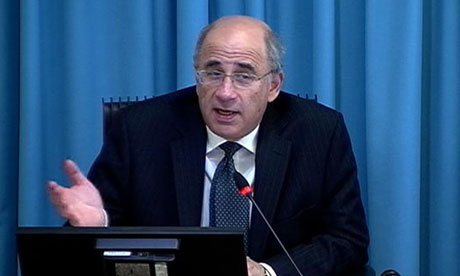
In class, you read The Guardian newspaper's account entitled Leveson Inquiry: the essential guide about the phone hacking scandal surrounding
The News Of The World.
1. The issue at a glance
2. Why is it being talked about now?
3. A brief history of press regulation
4. How is the press regulated now?
5. What does Leveson have to do?
6. The options and key arguments
7. What about the internet?
8. What happens next?
What is meant by the term 'free Press'? Does it mean that the Press are free to print anything?
What is meant by the assertion that the Press has an important role in democracy and that 'it holds power to account'?
The press is sometimes called The Fourth Estate: this term ‘Fourth Estate’ makes implicit reference to the earlier historical division of the Three Estates of the Realm: the clergy, the nobility, and the commoners.


Movies about press investigations / reporting:
The Post (dir. Stephen Spielberg 2017) about the Pentagon Papers - trailer here
The Killing Fields (dir. Roland Joffe 1984) - trailer here
All The President's Men (dir. Alan Pakula 1976) - trailer here
Frost / Nixon (dir. Ron Howard 2008) - trailer here
Network (dir. Peter Finch 1976) trailer here
Spotlight (dir. Tom McCarthy 2015) - trailer here
The Social Network (dir. David Fincher 2010) - trailer here
Nightcrawler (dir. Dan Gilroy 2014) - trailer here
Task: Make the BBFC certificate for your film, using the correct age classification. To do this, take an existing certificate into PhotoShop for editing.

Write a post about what you did. Explain in your post what the certificate indicates about the film's classification, illustrating with a screenshot and explanation. The aim is to provide evidence for your research and your understanding of classification, and how it relates to your own production.
This is an example of a good post.
Remember that the exam board has guidelines about student film content:


