BFI Media Conference presentation: download pdf from this page HERE - scroll down the list

"The media construct identity." How far do you agree with this view?
In your second year exam, you have a compulsory question on this topic Power and the Media. In our classes, we will be exploring how film, TV, the press and advertising construct representations of different groups. For example, we look at representations of gender and of Asian and Black identity. The full A2 course is here. Think about your recent analysis of gender (and disability) in Agent Carter.
Today, we start with the concept of Orientalism and the 'othering' of different cultures.
The media have huge power to construct representations and to perpetuate stereotypes. Stuart Hall, Professor of Sociology at the Open University in the field of cultural studies, emphasises the importance of the concept of representation, a term which I understand to relate to the accuracy or distortion of the reflection of a person, group or idea. Although he argues for audiences having an active role in understanding media representations, for Hall, communication is always linked with power and those groups who wield power in a society influence what gets represented through the media.
We also start viewing a major text the film Yasmin - all parts available online. It stars the brilliant Archie Panjabi.
Yasmin is a compelling and topical personal drama of what it means to
be Asian, Muslim and British in the 21st century, told from the
viewpoint of a Westernised woman working in Britain while living in her
own traditional culture.

Orientalism is an attitude that entails the stereotyping of Arab peoples and culture as exotic, backwards, uncivilized and sometimes dangerous. Orientalism emphasises, distorts and exaggerates differences between the West (Europe and the US) and the East. Edward Said was a founder of the field of post-colonial studies and his work Orientalism was a foundational text.
We watch the presentation below here

For Edward Said, the West constructs the East as an inferior ‘other’ in need of Western intervention and rescue; this was to rationalise the colonisation of the Arab world. From the 19th century onwards, popular paintings, literature, postcards, cartoons - that is, contemporary media - all portrayed certain stereotypes of Arab culture as an exotic and dangerous place of sand, belly dancers and hareems, with women exoticized and eroticized. It relates to the media because of its power to shape perceptions about identity. Said declared: “The sense of Islam as a threatening Other - with Muslims depicted as fanatical, violent, lustful, irrational - develops during the colonial period in what I called Orientalism. The study of the Other has a lot to do with the control and dominance of Europe and the West generally in the Islamic world. And it has persisted because it's based very, very deeply in religious roots, where Islam is seen as a kind of competitor of Christianity.” He argued that the West controlled the representations of the East through their invasions and settlements, their teachings and authorised views. He saw Orientalism as a Western style for dominating, restructuring and having authority over the Orient; he saw the ‘justification’ as every empire telling itself that its mission is not to plunder and control but to educate and liberate.
Our exam question will ask about how representations are created.


In GoogleMeet today, we start by understanding the term 'media ecology' and explore some of the main ideas presented by Marshall McLuhan and Don Tapscott. You have been emailed two documents, which you save in a new desktop file entitled MEDIA ECOLOGY.
As we look at these ideas and theorists, it is useful to bring to mind what is happening in the media world at the moment.
For example, President Trump has this week been banned from Twitter, FB and Instagram: why, and is it a good or bad thing? Why has Jack Dorsey the CEO of Twitter himself expressed concerns? What is the relationship between freedom of expression and social media?
Consider the ways in which the technology of communication has changed in your lifetime / your parents' time / your grandparents' time. Apart from the benefits of your smart phone, what are the downsides? Consider issues like addiction, distraction, sleep interruption, 'never off' scrolling, social disruption, 'never-ending' workday, threats to personal privacy as photos are in the public domain, spam, loss of vital data, health problems, surveillance, theft / crime, conflict minerals, peer pressure, living vicariously... in no particular order.
Why is the Online Harms Bill 2021 considered necessary?

No single individual is more central to media ecology than McLuhan, not because he was the first to employ this perspective, but rather because he popularized the perspective, and produced the first great synthesis of media ecological thought.
McLuhan was viewed as a Technological Determinist in that he viewed technology shaping us, rather than viewing people dictating how the technology will be used.
Clark, D.R. (2004). History of Knowledge. Retrieved from http://www.nwlink.com/~donclark/history_knowledge/mcluhan.html
Marshall McLuhan (1911-1980) foresaw the approaching changes in that it would bring about a new society characterized by greater connectivity and networking:
Whereas in the mechanical age of fragmentation leisure had been the absence of work, or mere idleness, the reverse is true in the electrical age. As the age of information demands the simultaneous use of our faculties, we discover that we are most at leisure when we are most intensely involved, very much as with the artists in all ages - Marshall McLuhan in Understanding Media: The extensions of man (1964).
McLuhan was viewed as a Technologically Determinist in that he viewed technology shaping us, rather than viewing people dictating how the technology will be used.
He is probably most famous for declaring that the medium is the real message (Understanding Media: The Extensions of Man, 1964). Later, McLuhan and Quentin Fiore wrote and illustrated the ability of media to “massage” a message or content (The Medium is the Massage: An Inventory of Effects, 1967):
The message of any medium or technology is the change of scale or pace or pattern that it introduces into human affairs. The railway did not introduce movement or transportation or wheel or road into human society, but it accelerated and enlarged the scale of previous human functions, creating totally new kinds of cities and new kinds of work and leisure. This happened whether the railway functioned in a tropical or northern environment, and is quite independent of the freight or content of the railway medium. Understanding Media, N. Y., 1964, p. 8)
However, later in life, he came to a different conclusion. In Paul Saettler's The Evolution of American Educational Technology (1990, p. 274), Saettler writes, “During the last years of his life, McLuhan changed some of his earlier ideas. He became less certain, for example, in ascribing a causal link between media and personal perception. Where he once saw the human being as a passive responder to media, he came to believe that individuals are active creators of their own environments.”
Saettler further writes that McLuhan's provocative pronouncements stimulated much of the creative thought that we now have about media. Thus, the medium is simply the carrier, while what we do in or through media are the real promoters of learning. Get the learning methodology correct and the media, rather it be large classrooms, small group activities, or asynchronous eLearning will simple be a vehicle for transporting that methodology to the learners.
In his later years, and partially as a response to his critics, McLuhan, along with his son Eric, wrote Laws of Media: The New Science (1988), in which he develops a scientific basis for his thought around what he termed the tetrad— four laws for looking at our culture, framed as questions, to a wide spectrum of humankind's endeavours. He postulates that all media exhibits these four types of effects:
Thus, four questions may be asked of any new media or technology:
This is a fairly important concept for it allows us assess the cause and effects of new technologies. For example, elearning:
The Internet:
TedTalk https://www.ted.com/talks/don_tapscott_four_principles_for_the_open_world#t-43365
What does Tapscott mean by ‘openness’? (There is a transcript)
· 1.Collaboration; idea of agora (open market) to orchestrate capability; in the sense of the boundaries of organizations becoming more porous and fluid and open.
· 2. Transparency is about the communication of information; letting in the sunlight; institutions are no longer naked
· 3. Sharing: embracing the commons is about giving up intellectual property, for example, IBM giving 4 hundred million dollars of software to the Linux movement which then gave them a multi-million dollar payoff.
· 4. Empowerment The distribution of Knowledge, Power: the age of networked intelligence decentralisation. The Arab Spring & new media; how mobile phones triangulated the positions of government snipers killing unarmed students in the streets during the Tunisian revolution; how Twitter in Syria saved lives;
Digital native / the net generation
Don Tapscott has written about the impact of digital networking on our economy. In The Digital Economy: Promise and Peril in the Age of Networked Intelligence (1995) and in a more recent book, Growing Up Digital: The Rise of the Net Generation (1998), he forecasts the coming influence of the demographic of wired kids born since 1978. The key technology is the I-way:
Just as the highway system and electrical power grid were the infrastructure for the industrialist economy, so our information networks will be highways for the new economy. - Don Tapscott
At the heart of Tapscott's analysis are twelve themes which differentiate the new economy from the old:
Neil Postman
https://quizlet.com/3734017/media-ecology-theory-flash-cards/
Neil Postman, Amusing Ourselves to Death (1985)
No media ecologist outside of McLuhan himself has enjoyed Postman’s success as a writer. Postman was also the founder of the media ecology program at New York University. In this, his best known book, he both explains the perspective (under the guise of media epistemology) and uses it to critique the role of television in contemporary American culture. Amusing Ourselves to Death is one of the most frequently cited works in the media ecology literature, this is also the final work in Postman’s television trilogy, complementing Teaching as a Conserving Activity (1979) and The Disappearance of Childhood (1982).
What Is Media Ecology? (Neil Postman)
Media ecology looks into the matter of how media of communication affect human perception, understanding, feeling, and value; and how our interaction with media facilitates or impedes our chances of survival.
The word ecology implies the study of environments: their structure, content, and impact on people.
An environment is, after all, a complex message system which imposes on human beings certain ways of thinking, feeling, and behaving.
In the case of media environments (e.g., books, radio, film, television, etc.), the specifications are more often implicit and informal, half concealed by our assumption that what we are dealing with is not an environment but merely a machine.
Media ecology tries to make these specifications explicit.
It tries to find out what roles media force us to play, how media structure what we are seeing, why media make us feel and act as we do.
Media ecology is the study of media as environments.
—Neil Postman, “The Reformed English Curriculum.” in A.C. Eurich, ed., High School 1980: The Shape of the Future in American Secondary Education (1970)
Sherry Turkle, Alone Together (2011)
Turkle provides an incisive critique of AI and robotics, and social media, based on interviews and observation. This book was followed up by Reclaiming Conversation in 2015.
TedTalk https://www.youtube.com/watch?v=eGFWLdEbvOY
This topic is the second half of your exam essay on media regulation.
We discuss how and why was IPSO and IMPRESS were formed to regulate the press, and why they replaced the PCC (Press Complaints Commission).
You start by finding out about IPSO. Explore IPSO's website to learn what kinds of newspaper titles IPSO regulates. Look at 'rulings' to see what kinds of issues IPSO has ruled on - are these serious issues related to harrassment, invasion of privacy, libel...or smaller breaches of the code of ethics related to accuracy? What kinds of action ('outcome') or sanctions were imposed? IPSO presents a picture of an organisation that regulates the press effectively and fairly. Not everyone agrees. For example, Hacked Off has describes IPSO as 'toothless'.
Hacked Off describes itself as a campaign for a free and accountable press and their main .


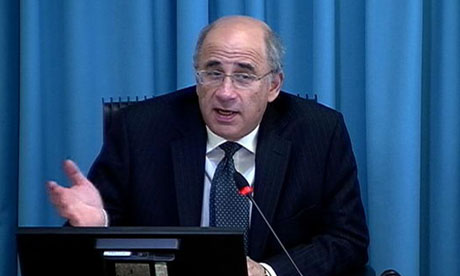
In class, you read The Guardian newspaper's account entitled Leveson Inquiry: the essential guide about the phone hacking scandal surrounding
The News Of The World.
1. The issue at a glance
2. Why is it being talked about now?
3. A brief history of press regulation
4. How is the press regulated now?
5. What does Leveson have to do?
6. The options and key arguments
7. What about the internet?
8. What happens next?
What is meant by the term 'free Press'? Does it mean that the Press are free to print anything?
What is meant by the assertion that the Press has an important role in democracy and that 'it holds power to account'?
The press is sometimes called The Fourth Estate: this term ‘Fourth Estate’ makes implicit reference to the earlier historical division of the Three Estates of the Realm: the clergy, the nobility, and the commoners.


Movies about press investigations / reporting:
The Post (dir. Stephen Spielberg 2017) about the Pentagon Papers - trailer here
The Killing Fields (dir. Roland Joffe 1984) - trailer here
All The President's Men (dir. Alan Pakula 1976) - trailer here
Frost / Nixon (dir. Ron Howard 2008) - trailer here
Network (dir. Peter Finch 1976) trailer here
Spotlight (dir. Tom McCarthy 2015) - trailer here
The Social Network (dir. David Fincher 2010) - trailer here
Nightcrawler (dir. Dan Gilroy 2014) - trailer here
Task: Make the BBFC certificate for your film, using the correct age classification. To do this, take an existing certificate into PhotoShop for editing.

Write a post about what you did. Explain in your post what the certificate indicates about the film's classification, illustrating with a screenshot and explanation. The aim is to provide evidence for your research and your understanding of classification, and how it relates to your own production.
This is an example of a good post.
Remember that the exam board has guidelines about student film content:

" How and why have approaches to the regulation of film and the Press changed over time?"
Topic 1: explain the BBFC’s current role (board of classification) in regulating film
Currently, the film industry in the UK is regulated by the British Board of Film Classification (BBFC). (TOPIC SENTENCE)
The BBFC is responsible for classifying films that have a cinema and DVD release. The BBFC uses published Classification Guidelines for certain age ranges, ensuring that the content of the film is age appropriate and that children or young people do not see films that are unsuitable for them.
The BBFC Classification Guidelines are based on regular research with the public and updated every 4-5 years. The research involves more than 10,000 people from across the UK, including teenagers. The Classification Guidelines are available on the BBFC website.
The classifications are:
· U – Suitable for all
· PG – Parental Guidance
· 12A – Only used for films shown in cinemas and suitable for 12 years and over. However, people younger than 12 may see a 12A so long as they are accompanied by an adult. This is by far the most contentious category.
· 12 – Video release suitable for 12 years and over
· 15 – Suitable for only 15 years and over
· 18 – Suitable only for adults
Topic 2: explain the BBFC’s origins as the British Board of Film Censors
Approaches to film regulation have changed over the last two generations. (TOPIC SENTENCE)
By the 1930s, film was neither a state monopoly nor subject to public service obligations unlike broadcasting, but the development of the British Board of Film Censors supervised anti-rearmament or ‘peace’ propaganda. Its operating costs were met by the cinema trade itself from fees charged for ‘examining’ films. It was a private body but with a president nominated by the Home Secretary. Its main aim was to control negative propaganda at home and endorse positive cultural propaganda overseas. By persuading companies to submit ‘scenarios’ first before starting production, it could prevent ‘undesirable’ films being made as well as interfere in details, down to the choice of individual words. The means were there to ‘educate’ the cinema-going public which by 1934 stood at 18 million, far more that the circulation figures of the national daily press and the BBC. It was the only true mass medium of the period. For example, feature films could shape general attitudes to particular policies and events, a form of ‘psychological rearmament’ (Vansittart). Cinema screens were kept free from films that portrayed soldiers as dupes of bodies with a vested interest in war, or films that presented army life as tyrannical, dull and futile. It was from the industrial and working class that recruits had to come, as wellas those needed for the new armaments industries. As a result, after 1935 there was no chance for any film with an anti-rearmament or pacifist message to reach the mass audience of 82 % working class youngsters who went to the cinema weekly. The trade association of film distributors was presided over by Sir Albert Clavering, director of the Conservative Party’s own film propaganda organization. Films take time and money to produce: distributors did not risk investing their time and money in films that might get banned. The BBFC refused to certify film that (for example) ‘portrayed British officers and forces in disgraceful, reprehensible or equivocal light’ or contained ‘realistic representations’ of the horrors of war’ and even ‘the presentation of objectionable propaganda’. This was politically important given the period with WW2 starting in 1939 and continuing until 1945.
Therefore, studios that turned out films ‘with the right messages’ like Alexander Korda’s London Films received City capital investment. By contrast, soft left /anti-war thinkers like the film critic (and later famous novelist) Graham Greene were dismayed by this approach. John Grierson, the pioneering ‘father of documentary film’ bemoaned the fact that peace stood no chance when the cinema made ‘war more exciting than peace’ and that its overall effect on the young was to act as ‘the recruiting sergeant’. Newsreels of the time, unlike newspapers, also depended for much of their news material the actual news footage on the active co-operation of various government agencies. Therefore the government could influence and control much of the diet that the cinema-going public consumed. One perfect example was a Pathe newsreel on the occasion of Hitler’s occupation of the Rhineland in 1936: ‘Scraps of Paper - German Troops Enter Rhineland’. Its consistent argument was the ‘the Germans have not changed’ and were preparing for war, despite the defeat of WW1. It deployed parroted propaganda phrases, pictures and posters, bits of film from previous events, with the unscrupulous use of photos such as German ministers in episcopal dress apparently ‘Heiling Hitler’ as he announced that he had torn up the peace treaty (the shots of the ministers were actually from a harvest festival). The main objective of making people accept rearmament was to stereotype Germans as ‘the beastly Hun’.
Topic 3: explain society’s changing attitudes
Occasionally film classifications create controversy and these incidents reflect society and its changing attitudes.
According to the Regulator archive report, the film was rejected when first submitted in September 1926, on the grounds that films should not address issues of ‘political controversy’ and that Potemkin’s pro-Revolutionary message was therefore unacceptable for classification.It was suggested that the film was rejected for “inflammatory subtitles and Bolshevist Propaganda”. (The Bolsheviks, also known in English as the Bolshevists, were a radical, far-left, and revolutionary Marxist faction founded by Vladimir Lenin and Alexander Bogdano. In general use, the term means 'a person with politically subversive or radical views; a revolutionary'. We still use the term 'bolshie'.) It was not just in the UK that the film's influence was feared: the film was considered "powerfully seditious" by critics and burned by French customs upon arrival, and banned by movie theaters in Pennsylvania because it "gives American sailors a blueprint as to how to conduct a mutiny."
The nine-day British general strike in May 1926 had provoked fears amongst some quarters of society of a potential revolution in the UK. According to The Times, screenings of the film in Berlin had already led to unrest and a censorship battle began between left wing supporters of the film and right-wing efforts to have it banned. It was remarked by some at the time that, had violence been the real problem, cuts could have been made. However, the fact that no attempts were made to tone down the film suggested political motives. By the time the film was looked at the again, in 1954, silent films were no longer commercially viable and the film was therefore likely to appeal only to a very small and select audience. With its potential to cause political unrest diminished, especially after the death of Stalin in 1953, the film was finally classified X uncut (persons under16 not admitted). Subsequently the film was reclassified PG uncut for a limited cinema re-release in 1987 and is now acknowledged as a classic.
Topic 4: Explain that the introduction of the 12A category reflected changing social attitudes
It is worth giving the context to the introduction of the 12A. I would first explain the introduction of the 12A in 2002
https://www.denofgeek.com/uk/movies/12a-ratings/49548/12a-the-problem-that-nobody-wants-to-fix
The 12A was a way to span the huge gap between a PG certificate film and a 15-rated movie, whilst not losing the warning element over the material within. The 12 certificate had been doing this to a degree since it was introduced at the end of the 1980s. But people were asking the BBFC: what are you supposed to do when a ten-year old wants to see a 12 movie, and you feel they’re ready for it? The BBFC decided to act. Following a seven-week trial that took place in Norwich towards the end of 2002, the BBFC replaced the 12 certificate for cinema classification with 12A (the 12 certificate is still in place for home entertainment releases). The Bourne Identity was the first new film in the UK to get the certificate. Local authorities, though, had been overruling the 12 rating given to the original Spider-Man film just before, and Sam Raimi’s movie was duly reclassified once the new certificate was formally introduced.
My second example is The Dark Knight (dir. Christopher Nolan 2008). The most complained about film of all time in Britain is The Dark Knight, which received 364 complaints in 2008. The rating 12A.

When The Dark Knight was released, some film critics thought it was too violent for children. This was a problem for the film's production company, Warner Bros., as the film was based on the DC Comic franchise, Batman, which is popular with younger audiences. The BBFC gave the film a 12A certification meaning children under the age of 12 could see the film if accompanied by an adult. Many commentators felt this rating was inappropriate given the film's tone and content, however it remained a 12A throughout its theatrical run.
Newspapers reflected public opinion in questioning whether The Dark Knight was suitable for children. The Batman sequel has been given a 12A certificate, although the BBFC strongly advises parents not to take under-12s. So why choose a classification that would admit them? With its numerous shootings and knifings, persistent atmosphere of nihilistic morbidity and the terrifying appearance and speech of Heath Ledger’s Joker, this seems as to be a 15 but being classified as 12A meant that unaware parents were able to take a child of any age to see it.
The British Board of Film Classification (BBFC), in response to the incredulity of reviewers, offered three justifications: 1) They are definitely not saying that the film is suitable for under-12s and strongly advise parents not to take younger children. 2) That the violence is discreetly presented. 3) The movie has a cartoon atmosphere, which lessens the impact of the aggression.
But one critic spoke for many saying “The film’s producers must be grinning like the Joker at what they’ve got away with. Though Batman is based on a cartoon, director Christopher Nolan has proclaimed his aim to make the cinema version more realistic: his Gotham City is indistinguishable from today’s New York. And, while it’s true that we are spared much gory detail of the damage done by bullets and blades, the film contains widespread use of knives, currently a sensitive issue.”
If the BBFC really is not recommending that under-12s go, why choose a classification that could admit them? Its confused stance makes a case for the return of the strict 12 certificate, although even that would be too low. The number that fits is 15, although, as the movie industry is well aware, such toughness would cut its box office numbers. A film is only reclassified if the company who owns it submits it to the BBFC for a new classification.
My third case study is The Woman In Black (dir. James Watkins 2012). The Daniel Radcliffe horror movie The Woman In Black was the most complained about film of that year according to regulators. It attracted 134 complaints, three times as many as 2011’s most complained about movie, ballet drama Black Swan, which complainants thought was going to be a film about ballet rather than about a ballerina’s mental disintegration, with a sex scene as an aggravating factor.
On the regulator website they warn that TWIB - which sees Radcliffe play a young lawyer who visits a remote, haunted village - contains “intense supernatural horror and threat”. This was because the woman in black appears to hang herself from a noose, there are child suicides and because younger audiences might want to see the film because they associated Daniel Radcliffe with his role in the Harry Potter films.
The issue may have been the rating. The Woman In Black had six seconds of cuts made to ensure it got a 12A. The regulator initially refused to reveal the nature of complaints, but admitted “some people felt the film was too scary at 12A”. However, the regulator defended the decision saying that the text was part of the national curriculum as a classic ghost story, children could see the West End play, that the period setting allowed some degree of separation and that it was clearly a horror film. The BBFC’s routine public consultation on the film showed that 89% of the public supported the 12A certification.
The 12A is an example of how regulatory change does not always reflect society’s changing attitudes. The controversial certificate, introduced in 2002 after school kids complained that the old 12 rating barred them from seeing Spider-Man is considered too vague by many and has been a constant irritant to the BBFC, with the vast majority of their complaints reserved for 12A films that were felt to be too grown-up for the age bracket. These include Casino Royale, Terminator 3: Rise of the Machines and Beowulf.
Two alternative case studies
Fight Club (dir. David
Fincher 1999) info here, Clockwork Orange (dir. Stanley
Kubrik 1971) info
here.
Fight Club
(1999) was classified 18. Some felt an uncut 18 was acceptable for this adult
viewing experience, but there were concerns under the BBFC
Guidelines of the time about the glamorisation
of violence and the potential for encouraging an interest in organised
bare-fist fighting. Neither the novel nor the film condoned brutal fighting, as
the conclusion of the narrative makes clear. Objections to Fight Club also centred
round the moral panic that Brad Pitt's huge appeal would inspire youngsters to
start bare-knuckle fighting. Some reports of this emerged in the US but none in
the UK.
In 2002, revised
guidelines concluded: "The new BBFC Guidelines established the principle
that adults should be free to choose their own entertainment, within the law,
and it was considered that there was nothing in Fight
Club that was in breach of UK law, or felt to be harmful."

Topic 5: explain the current situation / current thinking.
The ways in which we consume film nowadays makes regulation increasingly problematic as people claim the right to express themselves freely (TOPIC SENTENCE)
‘Gatekeeper ‘is the term for who allows and decides which content will go forward and be published or broadcast. Changing technologies have drastically altered the traditional gatekeeping process.
Nowadays, it is possible to consume film online, using unregulated sites like BitTorrent. This means that illegal, racist, untrue and inflammatory material as well as material that is harmful to children is available. Anyone can upload anything they want. Consumers have become producers. 300 hours of video are uploaded to YouTube every minute. Almost 5 billion videos are watched on YouTube every single day. Sonia Livingstone and Peter Lund suggest that the global nature of the net and the volume of material uploaded make effective regulation very difficult. Whilst Tapscott and Williams in Wikinomics celebrated how mass collaboration had changed everything, with the knowledge, resources, and computing power of billions of people who self-organise into a massive collective force, making the web the first global platform for collaboration in history, it is also true that this democratising force is open to potential abuse. Plunkett (2008) argued that a “new generation of UK media power players are ditching traditional gatekeepers and going straight to their audience via the web”.
Self-regulation is when individuals make choices about what media to access, or publish as a prosumer. It is also the display of control by established media outlets who can choose what content to distribute based on moral and ethical guidelines.
In 2009 John Beyer of Mediawatch UK, said “The BBFC has become far too lax in what it permits for public exhibition and there has been a gradual shift in what they regard as acceptable so that what would have been regarded as 18 a few years ago is now thought suitable for 15”. Certainly, more adult content seems acceptable at the certificate 12A level, ten years on, after films like The Dark Knight and Hunger Games, perhaps because of public desensitization. With parental responsibility for protecting children open to abuse and easy access to illegal downloads, some would argue that there has never been greater need for regulation.
Media regulation has always been controversial since it assumes state intervention, which limits freedom of expression and the right to communication. Globalization, technological convergence, and other structural changes such as privatization, commercialization, industry consolidation, and deregulation (referring to the relaxation of strict rules for broadcasting and telecommunications and the introduction of ‘light touch’ regulatory frameworks) have had an impact that affects media policy-making and regulation. Many commentators attempt to elaborate on the theoretical foundations for understanding the ongoing developments in communications policy and regulatory aspects by providing definitions of the concept of the ‘public interest’. In 2003, OFCOM was established, drawing together duties that had been the work of five different regulators. Lunt and Livingstone draw attention to the ways in which media policy is formulated and how the claims of ‘citizen’ and ‘consumer’ can conflict: the traditional distinction is that citizens are involved with politics and consumers are attached with popular culture.
The UK Government has announced that in January 2020, after a consultation on social media companies such as Facebook and Google, OFCOM will enforce codes of practice that spell out what tech companies need to do to protect users from harmful content. These will cover terrorism, child abuse, illegal drug and weapon sales, cyberbullying, self-harm, harassment, disinformation, violence and pornography. In other words, this is a new ‘duty of care’ approach that sets out legislation to make the UK the safest place in the world to be online. When the consultation on regulating social media companies was published in the summer of 2019, there were concerns that it could lead to regulation of the press by the back door, but the Government committed to ‘defending freedom of expression and in particular recognising and defending the invaluable role of the free press’. (Steven Swinford, 31.12.19 The Times ‘Tech bosses face court if they fail to protect users’)
It seems to me that every generation faces challenges in reconciling the need to protect the citizen, a need overseen by government regulatory bodies, and the right to develop new technologies that enhance our freedoms, liberate our creativity and offer us the freedom to consume media where, when and how we wish.
